


BLOG
Big Feelings Need Support: How to Help Children Understand and Express Their Emotions


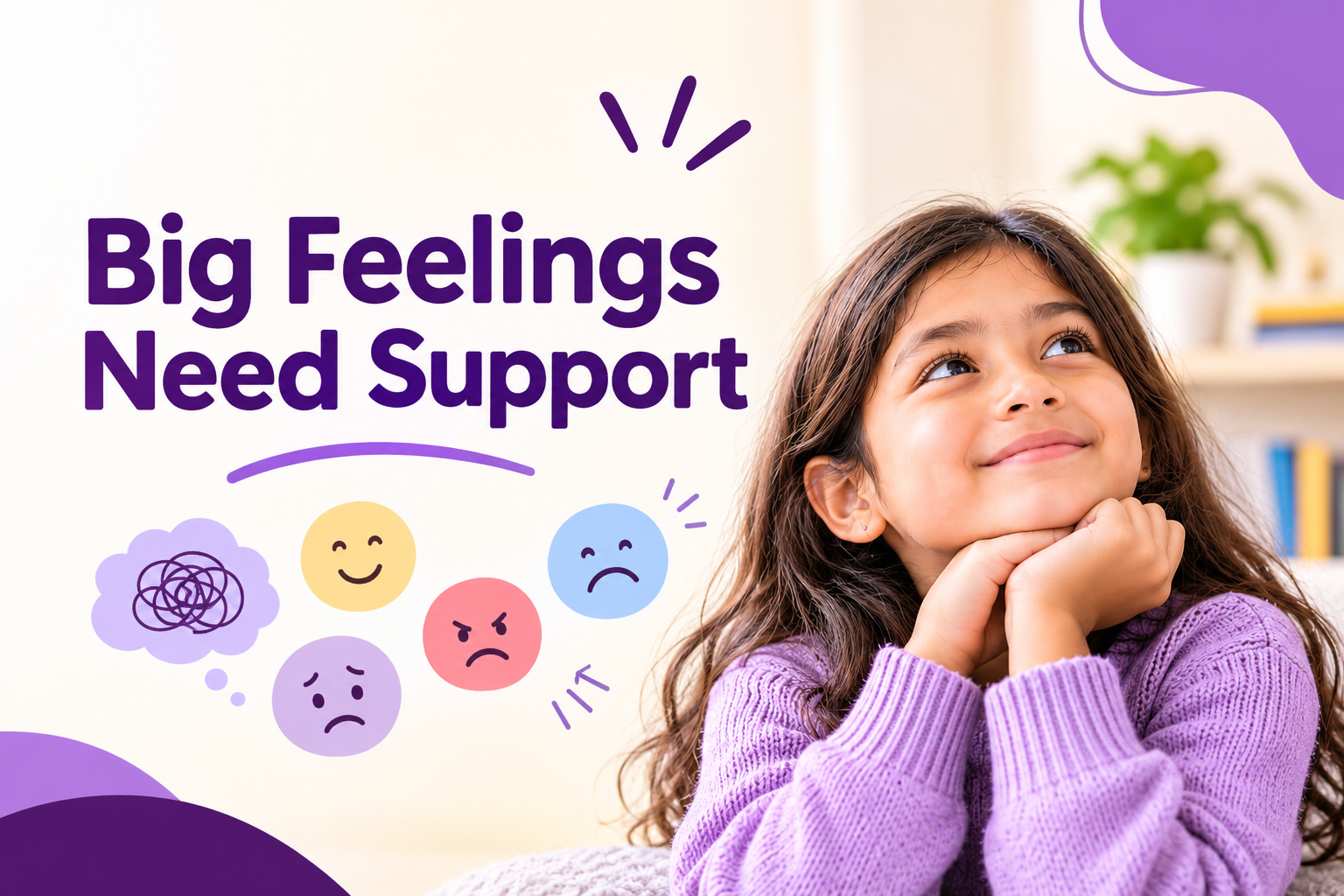
Every child experiences emotions differently. Happiness, sadness, worry, frustration, and excitement are all natural parts of growing up. But sometimes, big feelings can be difficult for children to understand or express.
Changes in routine, school challenges, friendship struggles, or unfamiliar experiences can make children feel overwhelmed. They may not always have the words to explain what is happening inside.
As a parent or caregiver, your patience, understanding, and support can make a meaningful difference. Helping children recognize their emotions and develop healthy ways to express them can support their emotional well-being as they grow.
Why Do Children Experience Big Feelings?
Children are still learning how to understand their emotions and respond to different situations. What may seem like a small change to an adult can feel significant to a child.
Some common experiences that can bring up strong emotions include:
- Changes in routine: Starting a new school, moving homes, or adjusting to a different schedule.
- School-related stress: Homework, academic expectations, or difficulties with classmates.
- Friendship challenges: Arguments, feeling left out, or making new friends.
- Family changes: Changes at home or adjustments in family relationships.
- Difficulty expressing emotions: Not knowing how to explain feelings of sadness, anger, worry, or disappointment.
Every child responds differently. Understanding what may be behind a child's behavior is an important first step toward offering support.
5 Ways Parents Can Help Children Manage Big Feelings
Children do not need every problem solved immediately. Often, they need a safe and supportive environment where they feel comfortable expressing themselves.
Here are five practical ways parents and caregivers can help.
1. Listen Without Judging
When a child shares something upsetting, give them your attention. Avoid immediately correcting their feelings or telling them not to worry.
Instead, try asking gentle questions such as:
- "Do you want to tell me what happened?"
- "How did that make you feel?"
- "Would you like me to listen or help you find a solution?"
Listening helps children feel heard, understood, and supported.
2. Help Children Name Their Emotions
Children may know that something feels wrong without understanding exactly what they are experiencing.
Help them identify emotions by using simple words such as happy, worried, frustrated, disappointed, or nervous.
You can also use everyday situations to talk about feelings. For example, if your child feels upset after a disagreement with a friend, help them recognize that they may be feeling hurt or disappointed.
Learning to name emotions can make it easier for children to communicate their needs.
3. Create Predictable Daily Routines
Consistency can help children feel more comfortable and prepared for everyday activities.
Simple routines around meals, homework, playtime, and bedtime can provide a sense of structure. When changes are coming, try explaining them in advance so children have time to adjust.
Remember that routines do not need to be perfect. What matters is creating an environment where children feel supported.
4. Teach Healthy Ways to Express Feelings
Children benefit from learning that all emotions are okay, but not every reaction is helpful.
Encourage activities that allow them to express their feelings in positive ways, such as:
- Drawing or coloring how they feel.
- Writing in a journal.
- Taking a few slow, calming breaths.
- Talking with someone they trust.
- Taking a short break when they feel overwhelmed.
Practice these activities together so children can become more comfortable using them when difficult emotions arise.
5. Show Patience and Understanding
Children may not learn emotional skills overnight. They may need repeated reminders, encouragement, and reassurance.
Instead of focusing only on a child's reaction, try to understand what might be causing it.
For example, a child who becomes frustrated during homework may be feeling confused, tired, or worried about making mistakes.
Responding with patience can help children feel safe while learning healthier ways to handle challenging situations.
When Should Parents Consider Professional Mental Health Support?
Strong emotions are a normal part of childhood. However, parents may want to consider additional support when emotional or behavioral challenges become persistent or begin affecting everyday life.
Some signs to pay attention to include:
- Frequent or intense emotional outbursts.
- Ongoing worries or fears.
- Noticeable changes in sleep or daily routines.
- Withdrawing from friends, family, or activities.
- Difficulty managing frustration.
- Challenges at school or at home related to emotional distress.
These signs do not automatically mean a child has a mental health condition. However, discussing concerns with a qualified mental health professional can help parents better understand their child's needs.
If a child talks about hurting themselves or someone else, seek immediate professional help.
How Children's Therapy Can Help
Children sometimes need support beyond what family and friends can provide. Children's therapy offers a space where they can explore emotions, develop coping skills, and work through challenges with guidance from a qualified professional.
Depending on a child's individual needs, therapy may help them:
- Understand and communicate their emotions.
- Develop healthier coping strategies.
- Build confidence and emotional awareness.
- Navigate changes and difficult experiences.
- Improve communication with parents and caregivers.
Parents and caregivers can also play an important role in the process. Working together can help create consistent support at home and in other parts of a child's life.
Every Child Deserves to Feel Understood
Big feelings are part of growing up. Children may experience worry, frustration, sadness, or uncertainty as they navigate new experiences and challenges.
With patience, understanding, and the right support, children can learn healthy ways to express their emotions and build skills that support their emotional well-being.
At Backpack Healthcare, we believe every child deserves compassionate mental health support. We help children, teens, and families access care that recognizes their individual needs.
Explore how Backpack Healthcare can support your family:
https://www.hellobackpack.com/
Frequently Asked Questions
1. Is it normal for children to have big emotions?
Yes. Children experience a wide range of emotions as they grow and learn. They may need time and guidance to understand and express what they are feeling.
2. How can I help my child talk about their feelings?
Create a comfortable environment, listen without judgment, and use simple questions. Encourage your child to describe what happened and how it made them feel.
3. What activities help children express their emotions?
Drawing, journaling, storytelling, playing, and talking with a trusted adult can help children communicate their feelings in different ways.
4. When should I seek therapy for my child?
Consider speaking with a qualified mental health professional if emotional challenges are persistent, intense, or interfere with your child's daily activities, relationships, or school life.
5. Can parents help children develop emotional skills?
Absolutely. Parents can support emotional development by listening, modeling healthy emotional expression, creating consistent routines, and encouraging positive coping strategies.