


BLOG
The 10 Best Online Therapy Companies (2026)


Finding the right therapist has never been easier, but choosing the right online therapy company can still feel overwhelming. With dozens of platforms available, it's important to understand how they differ before scheduling your first appointment.
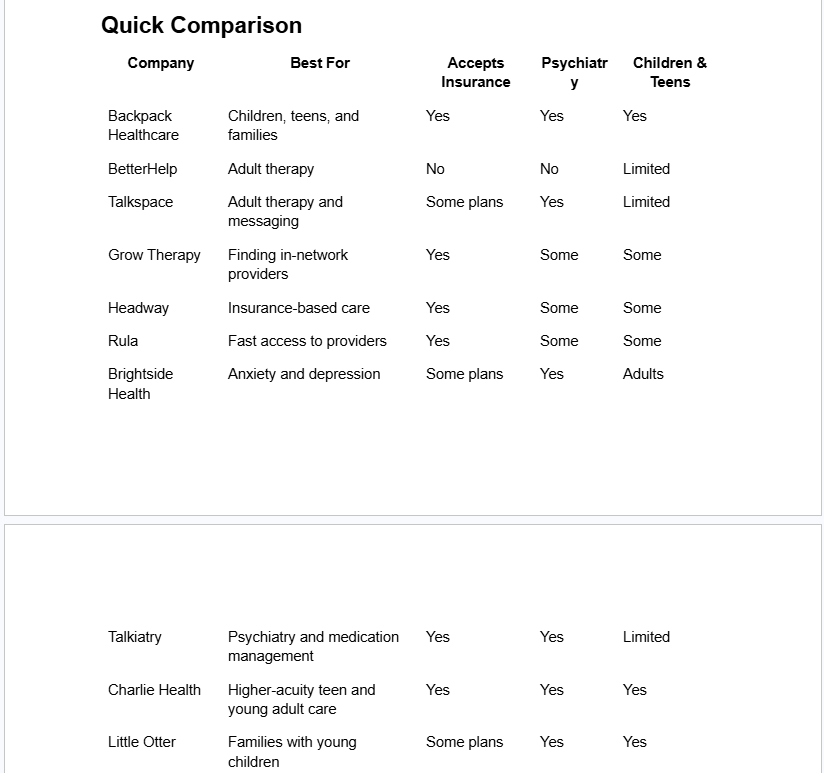
Some providers specialize in therapy for adults, while others focus on children and families. Some offer psychiatry and medication management, while others only provide counseling. Insurance acceptance, appointment availability, and treatment specialties also vary.
To help you compare your options, we've reviewed some of the leading online therapy companies based on their services, insurance acceptance, ease of access, and the populations they serve.
1. Backpack Healthcare
Best for: Children, teens, young adults, and families
Backpack Healthcare was built specifically for pediatric behavioral health. Unlike many online therapy platforms that primarily serve adults, Backpack focuses on helping children, adolescents, and young adults access high-quality mental health care from licensed clinicians.
Services include individual therapy, psychiatry, medication management, psychological assessments, and caregiver support. The organization also partners with schools, pediatricians, health plans, and community organizations to improve access to care.
Backpack accepts many commercial insurance plans and Medicaid in participating states, making specialized behavioral health care more accessible for families.
Pros
- Designed specifically for children and families
- Therapy and psychiatry available
- Accepts many commercial and Medicaid plans
- Caregiver involvement when appropriate
Considerations
- Availability varies by state
2. BetterHelp
Best for: Adults looking for flexible online therapy
BetterHelp is one of the largest online therapy platforms and connects adults with licensed therapists through video, phone, and messaging. Its subscription model makes therapy convenient for many people, although it generally does not accept insurance.
Pros
- Large therapist network
- Flexible communication options
- Easy to get started
Considerations
- Primarily designed for adults
- Insurance is generally not accepted
3. Talkspace
Best for: Adults who want therapy and psychiatry
Talkspace combines therapy with psychiatric services and accepts insurance through many health plans. Its mobile app and messaging features appeal to users looking for flexible communication between sessions.
Pros
- Therapy and medication management
- Growing insurance network
- Convenient mobile experience
Considerations
- Pediatric services vary by location.
4. Grow Therapy
Best for: Finding an in-network therapist
Grow Therapy helps people search for therapists and psychiatrists who accept their insurance. Rather than providing care directly, it matches patients with independent providers.
Pros
- Broad insurance participation
- Large provider network
Considerations
- Experience depends on the individual clinician selected.
5. Headway
Best for: Insurance-based mental health care
Headway simplifies finding therapists who participate with your insurance plan and makes billing more transparent.
Pros
- Easy insurance verification
- Large network of clinicians
Considerations
- Functions as a marketplace rather than a direct care provider.
6. Rula
Best for: Fast appointments
Rula connects patients with licensed therapists and psychiatric providers who accept insurance in many states.
Pros
- Convenient scheduling
- Insurance accepted
Considerations
- Services vary depending on provider availability.
7. Brightside Health
Best for: Anxiety and depression
Brightside focuses on treating anxiety and depression through therapy, psychiatry, and ongoing symptom tracking.
Pros
- Strong focus on common mental health conditions
- Medication management available
Considerations
- Primarily serves adults.
8. Talkiatry
Best for: Medication management
Talkiatry specializes in psychiatric evaluations and medication management delivered by board-certified psychiatrists.
Pros
- Psychiatry-focused
- Insurance accepted
Considerations
- Therapy options may be more limited than full-service providers.
9. Charlie Health
Best for: Teens and young adults needing intensive support
Charlie Health offers virtual intensive outpatient programs (IOPs) for individuals who need more support than weekly therapy alone.
Pros
- Higher level of care
- Specialized adolescent programs
Considerations
- May be more intensive than necessary for mild or moderate concerns.
10. Little Otter
Best for: Young children and families
Little Otter focuses on family-centered behavioral health with therapy, psychiatry, and parent coaching.
Pros
- Pediatric expertise
- Parent involvement
- Family-focused approach
Considerations
- Insurance participation varies.
How to Choose an Online Therapy Company
When comparing providers, consider these questions:
- Does the provider treat your age group?
- Do they accept your insurance?
- Is medication management available if needed?
- Can appointments be scheduled quickly?
- Do they have experience treating your specific concerns?
- If you're seeking care for a child, how are parents and caregivers involved?
The answers to these questions often matter more than choosing the most recognizable brand.
Frequently Asked Questions
Final Thoughts
The best online therapy company is the one that meets your individual needs. Whether you're looking for therapy for yourself, your child, or your entire family, consider factors like insurance coverage, clinician expertise, appointment availability, and the types of services offered.
The most important step is simply getting started. Early support can make a meaningful difference in mental health and overall well-being.